
Solving the right problems
with the right value chain
at the right time.
We help international wine buyers design and align the right South African value chain for each wine’s role in the portfolio — and keep it aligned over time.

Why We Exist
In international wine, most challenges don’t come from lack of capability. They come from selecting the wrong value chain for the opportunity.
In practice, this shows up as misalignment between briefs, suppliers, and commercial reality — only becoming visible later as inconsistency, cost pressure, or performance issues.
Most sourcing processes focus on product, price, and compliance. But by the time those are defined, the underlying structure has already been locked in.
Sans Silos shifts decisions upstream — before sourcing begins — where the value chain is still designable.
To help teams align the opportunity, the value chain, and South African production realities before decisions are made.
Plenty of capability exists. Sans Silos exists to create alignment.
Clients
Who We Work With
We work with retail wine buyers, category teams, and partners building or managing South African wine programs.
Our clients range from teams entering South Africa for the first time to those expanding existing portfolios.
How Our Clients Benefit
Products that fit the portfolio and address the right opportunities
Reduction in late-stage failures and rework
Confidence in entering or expanding South Africa
Programs that scale reliably
Faster, cleaner, commercially resilient decisions
Sustainability targets met via aligned and intergrated value chains
Projects we work on
Retail own-label and private-label wines
Own-label wines with origin or estate association
Co-branded retailer–producer programs
Organic and sustainability-driven ranges
Lower- and no-alcohol wine programs
Value
How Value Is Created
Embedded Capability - deep relationships across the South African wine value chain — producers, winemakers, vineyard teams, bottlers, packaging partners, private-label specialists, logistics, and design collaborators — combined with hands-on experience in product development, wine blending, vineyard planning, supplier onboarding, and contracting.
Clarity Upfront - define opportunities, constraints, and business context before committing resources.
Aligned Partners - match suppliers and partners by product, brand, business incentives, and value-chain power dynamics.
Adaptive Problem & Solution Alignment - solve the agreed problem while staying flexible to vintage, certification, or market changes.
Reliable Delivery - predictable outcomes, reducing delays, rework, and risk across programs.
Case Studies
These case studies are based on lived experiences from years spent inside South African value chains and working with international retailers, producers, and bottlers — experiences which have directly shaped the Sans Silos Flow™.
They show how alignment — across partners, incentives, timelines, and decisions — shapes the outcome far more than any single action or vintage.
Context
US Retail Client: Supplier Alignment & Consistency
A US retailer questioned whether South Africa could deliver a stable wine style year after year.
One deeply aligned cooperative delivered eight years of uninterrupted performance — proving that consistency is engineered through system alignment, not seasonal luck.
Asian Importer & Distributor Client: Brand Architecture & Innovation
A top Asian importer needed a modern, sense-of-place South African wine. A reluctant winery engaged once the full context was shared — discovering the project solved an innovation gap in their own portfolio.
EU Retail Client: Building Resilient Value Chains Through Holistic Alignment
When a new technical requirement exposed a bottleneck, three partners chose to strengthen the system rather than let it break.
Shared investment replaced downstream pressure — turning a risk into long-term resilience.
US Retail Client: Portfolio Fit & Product Strategy
A US retailer requested a simple, fast, single varietal wine — but early conversations revealed a deeper portfolio opportunity.
Parallel development across styles, suppliers, and category roles uncovered a concept that outperformed the brief in consumer testing.
Financial Architecture & Viability
A series of lived projects revealed how hidden costs, forecasting drift, and misaligned incentives quietly destabilise wine programs.
Redesigning the financial architecture strengthened margin, supplier retention, and long-term stability.
How We Work
Our Approach
Independent Exploration
We start with the problem, not with preselected suppliers or preset answers. Early work is about understanding the opportunity and the system behind it — before decisions lock in direction.
Systems Awareness
We look beyond individual decisions to how brand intent, supply reality, market dynamics, operations, and incentives interact — because outcomes are shaped by the system, not isolated actions.
Collaborative Co-Creation
Buyers, suppliers, and partners are brought into the conversation early. This allows solutions to be shaped together, rather than passed down a chain and reinterpreted along the way.
Commercial Clarity
Decisions are grounded in long-term value, operational reality, and the consistency required for products to perform year after year — with incentives and structures that support that performance, not just a successful launch
Our Process
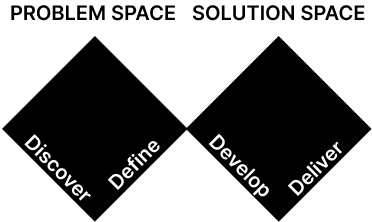
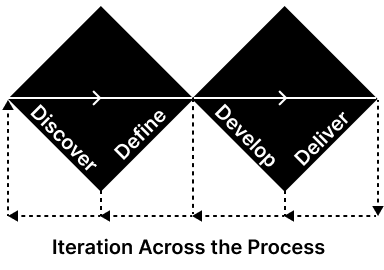
The Sans Silos Flow™
The Sans Silos Flow™ is a practical sequence shaped by years inside South African wine value chains.
It helps teams move from uncertainty to clarity — and from clarity to products and systems that can deliver reliably over time.
The Sans Silos Flow™ is not a project plan.
It is a sequence for aligning the system before it locks in decisions.
-
Goal
Define what the wine must achieve within the portfolio, and what success looks like commercially, strategically, and operationally.
This is not product definition — it is business intent definition.
Inputs
Portfolio structure and gaps
Brand positioning and architecture
Commercial targets (margin, price tier, volume range)
Category performance data
Consumer and market insight
Sustainability and compliance requirements
Internal stakeholder perspectives
Activities
Portfolio role mapping (what must this wine do?)
Category and competitor analysis
Stakeholder alignment sessions
Constraint identification (commercial, regulatory, operational)
Early hypothesis building around opportunity shape
Outputs
Co-defined opportunity statement
Clear portfolio role definition
Commercial guardrails (price, margin, volume logic)
Initial risk and constraint map
Shared understanding across stakeholders
-
Goal
Translate the opportunity into what is actually possible in South Africa, across producers, regions, volumes, and constraints.
This stage prevents theoretical briefs from colliding with production reality later.
Inputs
Defined opportunity statement
Historical vintage and supply data
Regional production characteristics
Producer capability landscape
Certification and compliance frameworks
Volume and cost benchmarks
Activities
Regional feasibility mapping (climate, style, consistency potential)
Producer capability assessment (technical + commercial)
Volume realism testing across price tiers
Constraint identification (vintage variability, yield, sourcing limits)
Early supply-side shortlisting
Outputs
Feasible sourcing landscape
Realistic region and producer set
Supply constraints and risk profile
Early “can / cannot” boundaries
Refined opportunity feasibility lens
-
Goal
Identify and design the optimal value chain for the opportunity — not just capable suppliers, but commercially and structurally aligned partners.
This ensures the wine is not only possible, but sustainable across time, scale, and market pressure.
Inputs
Validated opportunity definition
Feasible producer landscape
Commercial and brand requirements
Packaging, logistics, and compliance requirements
Supplier capability data (technical + commercial behaviour)
Growth and volume expectations
Activities
Value chain matching (producer ↔ opportunity fit)
Commercial alignment testing (pricing logic, margin structure, incentives)
Brand architecture compatibility assessment
Producer engagement and behavioural fit testing
Multi-scenario modelling (volume, price, growth paths)
Risk testing across stakeholders (producer, buyer, retailer, compliance)
Long-term relationship viability assessment
👉 This is where “capable supplier” becomes “right partner”
Outputs
Selected value chain options (not just suppliers)
Ranked partner fit assessment
Commercial structure alignment model
Risk and incentive alignment map
Recommended primary + fallback value chains
Clear “fit vs non-fit” decisions
-
Goal
Lock in the agreed value chain into a commercially viable, operationally executable program — and ensure it remains aligned over time.
Inputs
Final value chain selection
Commercial agreements
Technical specifications
Packaging and compliance requirements
Logistics and rollout planning
QA/QC frameworks
Activities
Contract and specification finalisation
Supplier onboarding and alignment confirmation
Production coordination and oversight
QA/QC monitoring and feedback loops
Retailer compliance and reporting alignment
Performance tracking across cycles (vintage-to-vintage)
Issue resolution across value chain stakeholders
Outputs
Fully operational wine program
Delivered product meeting specification
Verified traceability and compliance structure
Performance reporting system
Continuous improvement feedback loop
Documented learning for future cycles
Clarity first. You can’t align what you don’t understand.
No silos. Problems and solutions belong to the same system.
Ask better questions. Good decisions come from shared context.
Design for consistency. One great vintage is not success.
Tell the truth. About capability, risk, timing, and fit.
Strengthen the system. The goal is not one good product, but a value chain that performs reliably over time.
Our Principles
Sans Silos is led by Stephan Nell, who has worked with every part of the South African wine value chain—including producers, bottlers, logistics partners, brand teams, technical teams, and international buyers.
Stephan’s approach combines formal training in systems thinking, design thinking, and business model innovation with years of lived experience inside real wine programs.
This combination shapes how opportunities are explored, partners engaged, and decisions framed: curiosity before conclusions, context before solutions.
Led by Stephan Nell


Work With Us
Sans Silos works with a small number of teams who want clarity, strong partnership fit, and long-term performance from South African programs.
-
Every Sans Silos engagement begins by building a shared understanding of the opportunity, the constraints, and the systems behind them. Before decisions are made — about products, partners, or investment — we take time to explore the problem space and the solution space together. This early work helps teams see what’s possible, what’s risky, and what truly matters.
Quick Opportunity & Supplier Scan
A short, structured engagement to surface better information early — exploring feasibility, constraints, and partner requirements so internal decisions are better informed. Often used to decide whether and how to proceed, before committing significant time or budget.Full Product & System Development
When the opportunity is confirmed, we extend the work across the full Sans Silos Flow™ — shaping the product, testing opportunity–partner fit, co-designing the system around it, and supporting delivery over time. Designed for long-term consistency, not one-off success.Targeted System Support
For programs that don’t require a full end-to-end engagement. We step in where it’s most useful — refining the opportunity, stress-testing partner fit, supporting delivery, or strengthening learning systems. Always grounded in an understanding of the wider system.Strategic Advisory
Independent thinking for teams managing ongoing South African portfolios — supporting forecasting, supplier strategy, risk exposure, and financial architecture without adding operational complexity. -
We are a product and system development partner for South African wine — built for clarity, alignment, and reliability.
We Work:
• between your category and portfolio strategy and the realities of South African production
• alongside your buying, technical, and brand teams
• in conversation with producers, bottlers, and key partnersYou hold the brand, the consumer insight, and the commercial decisions.
We hold the structure that connects those decisions to a system capable of delivering the product consistently.What We Hold
The Opportunity Space
We help ensure the brief reflects the real opportunity: category role, consumer insight, portfolio intent, timing, constraints, and feasibility — the foundation for shaping the right product.
2. Matching the opportunity to the right partners
We assess partners for capability, commercial structure, timing, incentives, and long-term fit — ensuring the opportunity and the supplier genuinely belong together.
3. The Project Spine
We ensure teams stay on the same page, with clarity around who needs to know what, when, and why.
This is the connective tissue that prevents gaps, delays, and misinterpretation.4. The Learning Loop
We capture and structure what each cycle teaches — strengthening the chain and improving performance
-
What collaboration actually looks like
Meetings
Conversations are purposeful and documented. Sessions are recorded confidentially and summarised using secure transcription and AI summaries, so decisions, nuances, and open questions are captured accurately and shared clearly.
Shared Working Space
Each project is anchored in a living Notion document — holding the opportunity framing, decisions, assumptions, constraints, partner input, and next steps as the work unfolds.
This becomes the shared reference point across buying, brand, technical, and supply teams.
Supporting files and references are shared through secure, access-controlled folders linked to the project workspace.
Decision Clarity
Key decisions are captured in one place, with context. This reduces rework, prevents misinterpretation, and supports confident progress.
Working With Partners
Value chain partners are brought in with the right level of context at the right time — enabling them to engage thoughtfully and contribute in ways that fit both the opportunity and their own capabilities.
-
To protect clarity and alignment:
Sans Silos does not invoice for wine, packaging, or production
Nothing passes through our books
Commercial relationships remain directly between you and your value-chain partners
Our role is to design, assemble, and support the value chain around your opportunity — holding alignment across relationships, decisions, and delivery as programs develop and scale.
We invoice for our services.
In longer-term engagements, fees may include a transparent, scale-linked component reflecting the ongoing work required as volume and complexity increase.This structure allows teams to start small, build confidence, and scale intentionally — while keeping incentives aligned across the system.
Get in Touch
Email:
partner@sanssilos.com
Or use the form below
Include:
market or region
current stage of your project